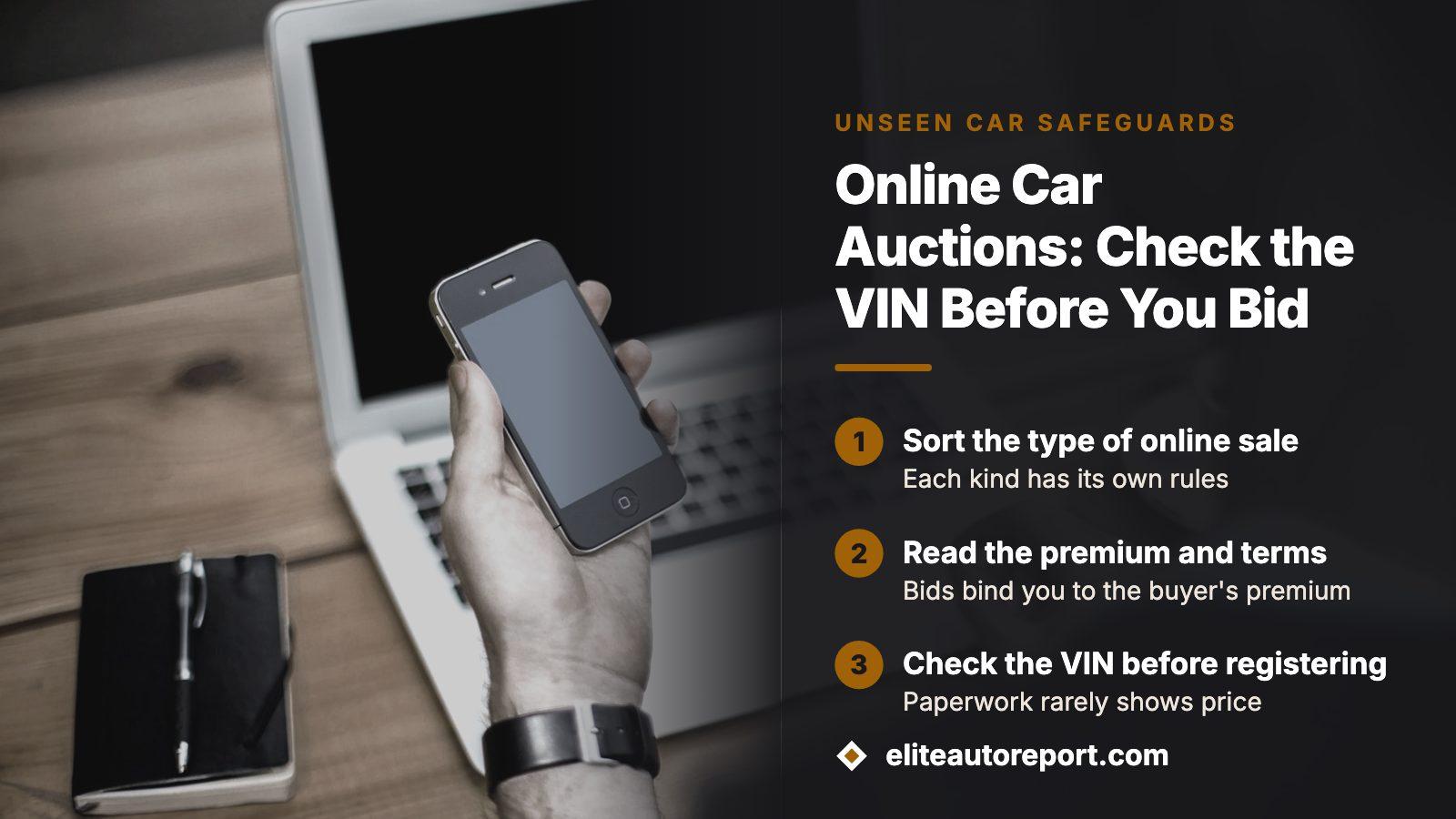
THE SHORT ANSWER
Online car auctions come in several kinds: salvage pools, dealer-only wholesale, government sales and collector-car houses. Each sets its own terms, and most sales are final and as is. Copy the VIN from the listing, read its past auction records and photos, check title brands, then set a maximum bid that includes fees. Start with the free preview; if the lot survives it, one payment opens the full report.
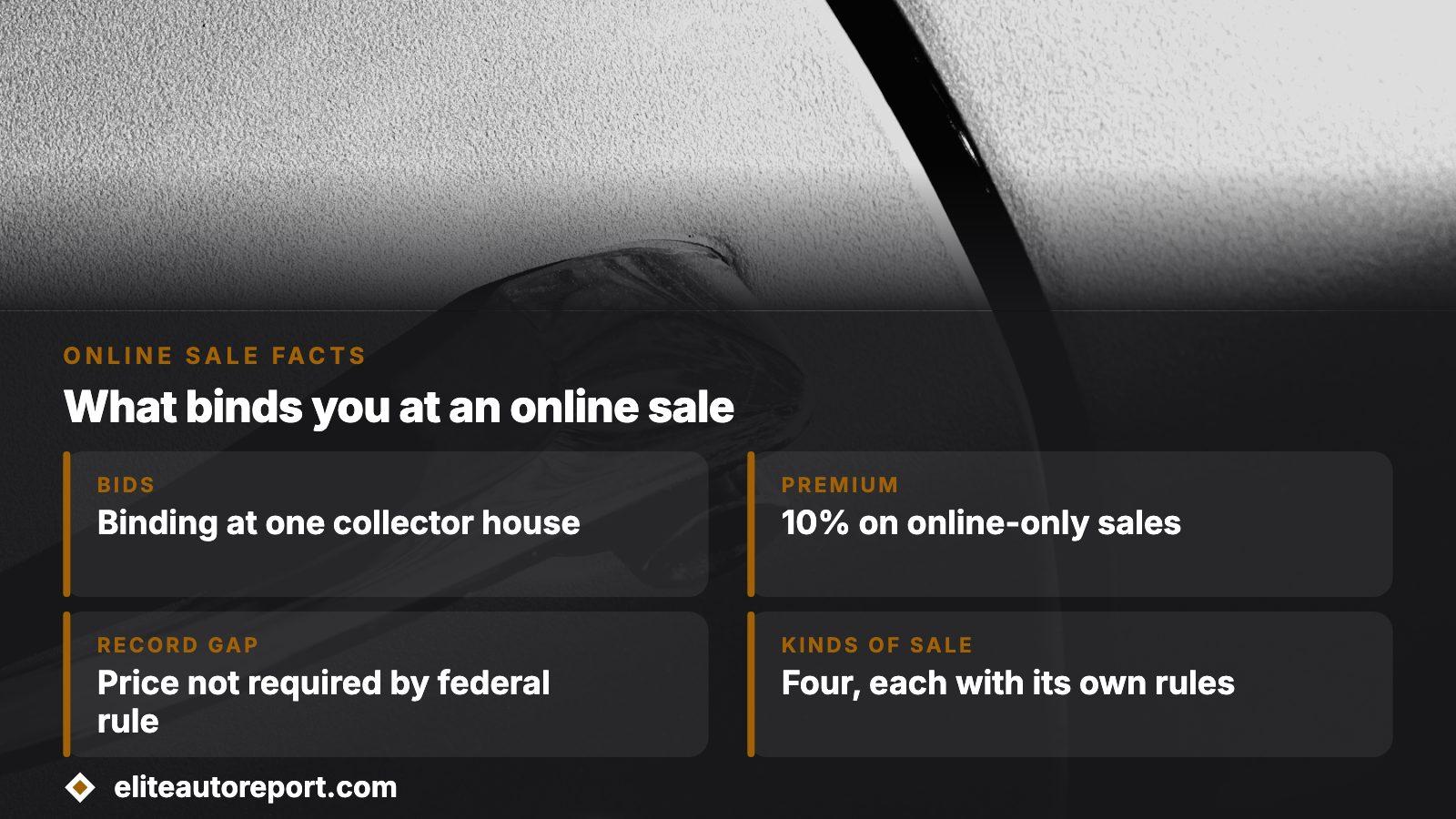
- Bids
- Binding and irrevocable at one collector-car house
- Fees
- A 10% buyer's premium at that house's online-only sales, on top of the bid
- Record gap
- Federal rules make auction companies keep owner, buyer, VIN and mileage, not price
Four kinds of online sale, four sets of rules
The phrase covers very different marketplaces, and the VIN check you need depends on which one you are in. A listing that looks like a simple online bid may sit in any of these.
- Insurance and salvage pools, where totaled, recovered and damaged cars are offered and some buyers must register first.
- Dealer wholesale auctions, which are aimed at licensed dealers and may open a few lots to the public.
- Government sales, where a federal agency or its contractor sells surplus and seized vehicles over the web.
- Collector-car houses, which run timed online-only sales next to their live events and sell the rare end of the market.
Government sales are the easiest to read about on official pages. USA.gov says the government sells thousands of vehicles a year, some in prime condition and some seized and in need of heavy repair, by online, in-person or mail-in bid.
Why an unseen car needs a paper trail
At a lane auction you can at least look at the car. Online you get a handful of photos chosen by someone else, a short description and a VIN. The VIN is the only part you can verify independently.
A luxury or exotic car makes this sharper. Repairs are expensive, so a hidden repair history costs more, and the market pays a premium for cars with a clean story. A car sold through a salvage lane two owners back can still look flawless in fresh listing photos.
Earlier sale photos are often the clearest evidence, because they were taken before anyone tidied the car for resale. If the preview shows the same VIN in an earlier auction lane with a crumpled corner, you have learned something no description will volunteer.
What the VIN check reads for an auction car
Run the check on the listing's VIN before registering a bid, and again once you have the winning invoice, to be sure the two match. For auction work, these records matter most:
- Past sales at auction, with dates and the photos taken at the time.
- Brand history (salvage, junk, flood) with the date each label went on.
- Odometer entries across the years, where a rollback or a silent stretch shows.
- Accident and damage records, plus insurance total-loss entries.
- Open recalls, which an auction listing rarely mentions.
The federal title system behind much of this data says its report is intentionally brief, built around a small set of fraud and theft indicators, so a private report that adds photos and sale entries fills in the picture rather than replacing it.
What auction paperwork will and will not show
Federal odometer rules require an auction company to hold records for five years after each sale: who last owned the car (not the auction firm), who bought it, the VIN, and the odometer figure at intake. They are kept so that the odometer trail can be followed. A sale price is not on that list, which is why price questions usually need a different source.
A quiet title search proves little
The federal title database puts its vehicle coverage at 87 percent, yet just over half the states feed it records, so gaps remain. A car with a past can come back looking spotless. Count a quiet result as one input and open the state title record it links to.
Terms, premiums and the as-is clause
Read the house terms before you bid, because the price on screen is rarely the price you pay. One collector-car house states that the winning bid excludes its buyer's premium and taxes, that online-only sales carry a 10% premium, and that every bid is final and cannot be withdrawn.
| Item | Example from that house |
|---|---|
| Hypothetical final bid | $100,000 |
| Online-only premium at 10% | $10,000 |
| Total before taxes and other fees | $110,000 |
The same terms say estimates are opinions, not predictions of the selling price, and that the lots are offered with all faults and no warranty. For ordinary public sales, the FTC's dealer rule says dealers and the auction company must follow it, with a Buyers Guide that states whether the car is as is. The rule does not reach sales closed to consumers.
Run the check before you register or bid
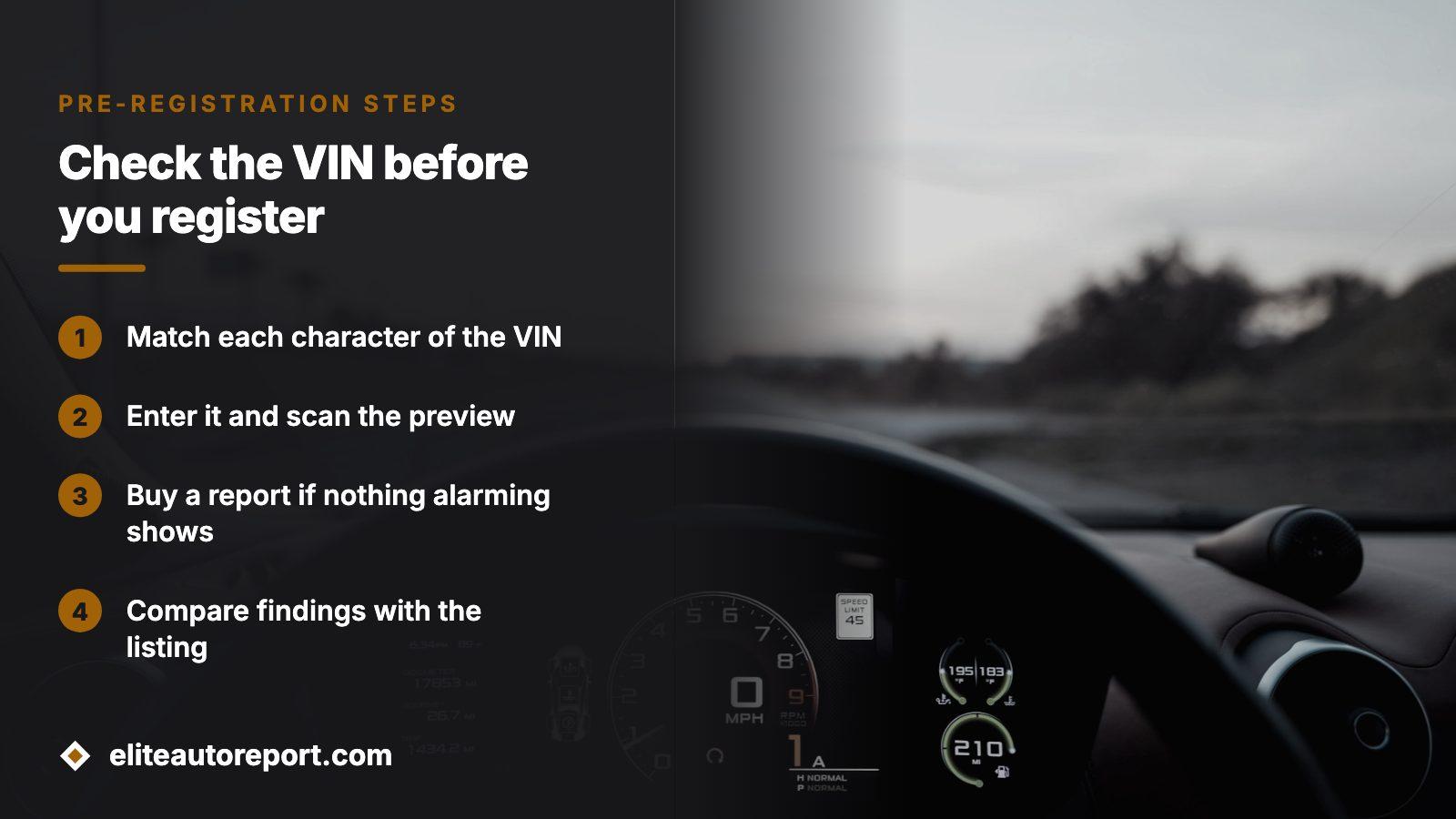
- Take the VIN from the listing and match each character against the dash or door-jamb photo.
- Enter the VIN at EliteAutoReport and scan the preview for sale entries and brands.
- If nothing alarming appears, purchase the report and go through the photos, mileage line and damage entries.
- Ask the seller about anything the report shows that the listing does not mention.
- Set your top bid with the premium and transport already counted.
See the pricing page for amounts. Nothing is charged for the preview; a report is paid for one time, and there is no subscription. A pack suits anyone weighing several lots.
What a salvage auction buy can turn into
From an NHTSA owner complaint
An owner who complained to NHTSA in July 2024 had won a 2007 Mercedes-Benz ML350 in an auction the previous autumn. It carried a salvage brand. Rain water had ruined a rear module, so the car failed to qualify for the plate inspection: nothing electrical worked properly, from the key fob to the tailgate. The owner added that models from 2006 to 2012 share the weakness.
The story is one owner's account, not a finding. It shows the usual pattern: a low bid, a water-damaged part and an inspection that comes after the money is spent. A VIN preview that shows a salvage entry and a flood or water note before the bid costs far less than finding it at the inspection station.
After you win
Match the VIN on the invoice to the car when it arrives, compare its condition with the sale photos, and keep the paperwork. Salvage and flood cars often need state inspections before registration, and the rules for those inspections differ by state.
Check the VIN for open recalls, then book an independent inspection before any long drive. The FTC says a history report cannot stand in for a mechanic's examination, and a rare car deserves a specialist.
Where this information comes from
- USA.gov: Car auctions — Backs the points about government sales, their online format and the range of vehicle condition.
- NMVTIS: information for consumers — Source for brand rules by state, the reporting gaps and the 87 percent coverage figure.
- FTC: Dealer's guide to the Used Car Rule — Explains how the Buyers Guide and as-is rules apply to public auctions.
- eCFR: 49 CFR part 580 — Lists what an auction company must keep after a sale, and for how long.
- Gooding Christie's: Terms — Shows the buyer's premium, final bids and as-is language of one collector-car house.
- NHTSA owner complaint 11602503 — owner experience, paraphrased
Sources and photos: Facts checked against the sources above in November 2026. Photos by Alejandro Escamilla, Dennis Eusebio and Linus Belanger on Unsplash; diagrams by EliteAutoReport.
Keep reading
- Auction History by VIN: Photos for Luxury, Exotic and Classic CarsHow a car's past auction entries and photos are read.
- What Happens When You Buy a Car at Auction: Fees, Title and Hidden HistoryThe steps from registration to a winning bid.
- Largest Car Auctions: Who Runs Them and What a VIN Shows From EachWho runs the big salvage, wholesale and collector sales.
- Flood Damage Car Check Before You Bid: A Step-by-Step Guide for Auction CarsSpotting water damage before you bid.
Frequently asked questions
Can anyone bid at an online car auction?
It depends on the seller. Government sales are open to registered members of the public, and collector houses require registration before bidding. Wholesale dealer auctions are built for licensed dealers and may open only a few lots to everyone. Read the registration terms of each sale first.
Are online car auction sales final?
Usually. One collector house calls every bid final, binding and irrevocable, and lists its lots as is with all faults. Public auction sellers must follow the FTC Buyers Guide rules, which say whether the car carries a warranty. Assume you cannot cancel.
What should I check on the VIN first?
Start with earlier auction sales and their photos, then title brands, mileage over time and damage or total-loss entries. Open recalls come last but are quick to check. A mismatch between the listing and the record is a reason to ask questions or walk away.
Does an online auction listing show the sale price history?
Not as a rule. Federal record-keeping rules for auction companies cover owner, buyer, VIN and mileage, and do not list price. A report may show past sale entries, but treat any price you find as context rather than proof of value.
Is the VIN report free?
No charge applies to the preview, which tells you if sale and brand records exist. The whole report is bought once at the amount on the pricing page, with nothing recurring.
Now check the car itself
The guide explains what to look for. The report shows what this VIN has on record.