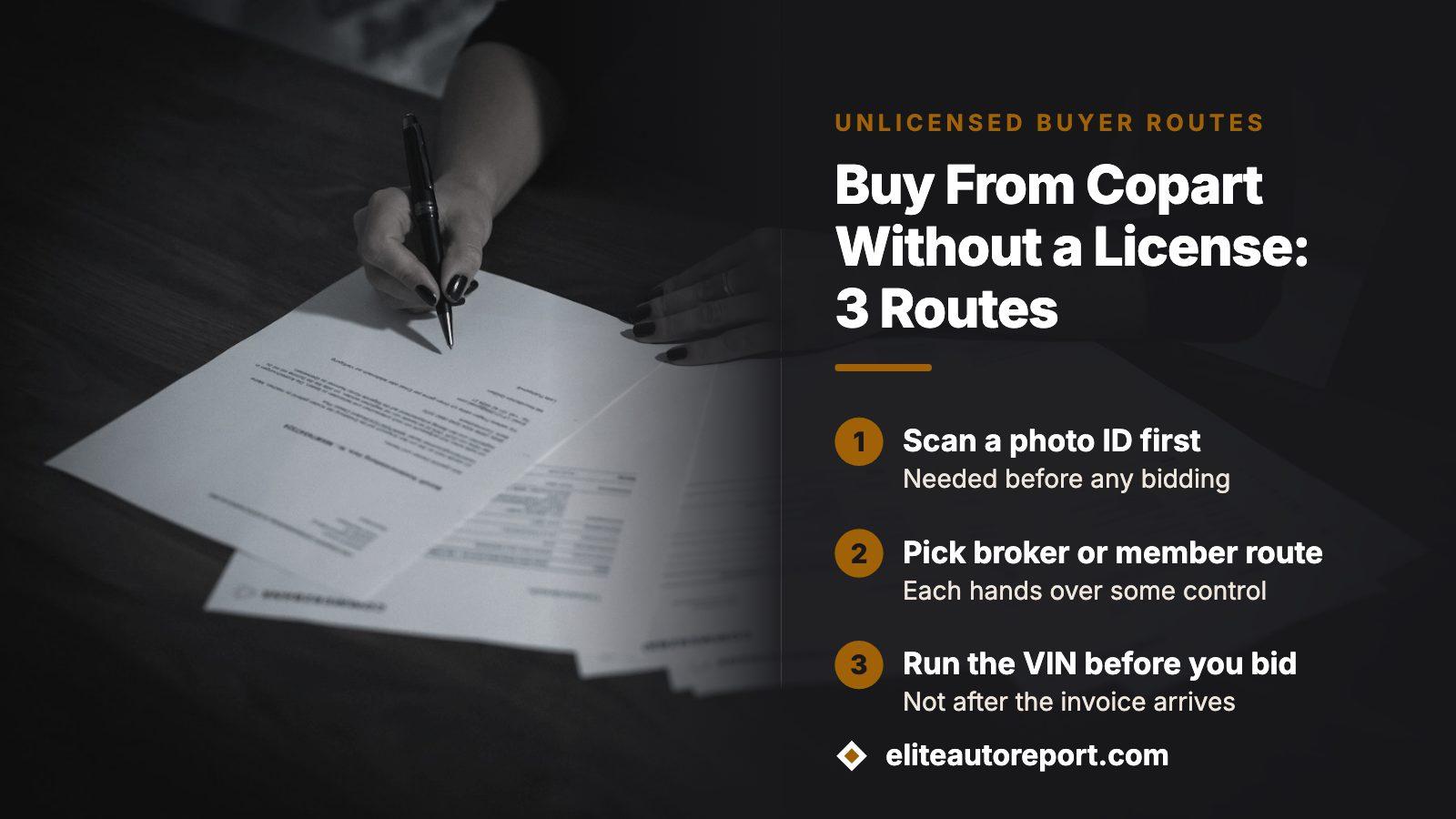
THE SHORT ANSWER
Create a Copart account, pay for Basic or Premier membership, and upload a photo ID. Then choose a lot tagged for no business license, or hire a licensed broker who bids for you and sells the car on to you. Rules differ by state, so read Copart's state licensing overview, and run a VIN check before you place a bid.
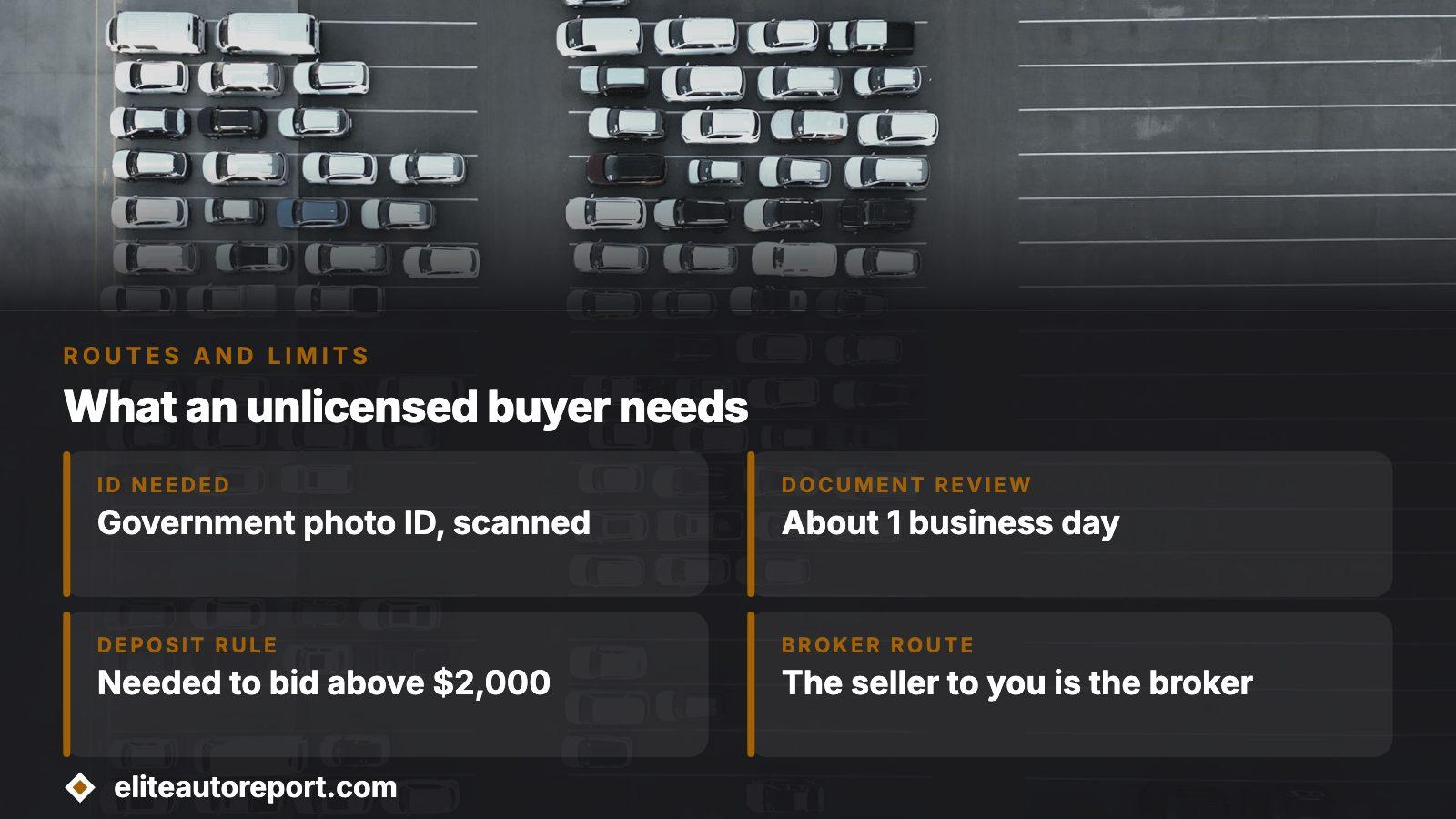
- ID needed
- Government photo ID, scanned before bidding
- Document review
- About 1 business day after upload
- Basic deposit rule
- Deposit needed to bid above $2,000
- Broker
- The seller to you is the broker
Do you actually need a license to bid at Copart?
Not always, and the answer depends on where you live and which lot you want. Copart's own licensing page says a bidder can place bids with a government ID on file, even with no business license. What changes is the inventory you can reach: some lots are restricted by state rules to licensed businesses.
Copart's annual report adds context. Its vehicles go principally to licensed dismantlers, rebuilders, repair shops and used car dealers, and the company lists rules on sales to the general public as a business risk. In other words, the public gets in, but through narrower doors than a dealer.
At EliteAutoReport we read auctions from the history side, especially for luxury, exotic and classic cars, so the practical question for us is what happened to a car before it reached a lot. That matters more once you learn how thin your options are at the bidding stage.
The three routes open to an unlicensed buyer
Copart's help page names two options for someone without a license. A third, the broker's own storefront, sits inside the first. Here they are side by side.
| Route | How it works | Main catch |
|---|---|---|
| No-license lots | Filter Copart's vehicle search for the option labeled No Business License Required | Smaller pool of cars |
| Licensed broker | A third party bids and buys for you, then handles paperwork and shipping | Extra terms and fees set by the broker |
| Casual-sale rules | Some states let private buyers bid on a few branded cars a year | Strict yearly limits, set by each state |
Whichever you choose, the same account steps come first, and the same car-history problems follow you home.
Setting up the account so you can bid
You pick a paid membership level, Basic or Premier, then upload documents. Copart wants them before you bid, and says it should process them in 1 business day, so do this days ahead of any lot you care about, not on auction morning.
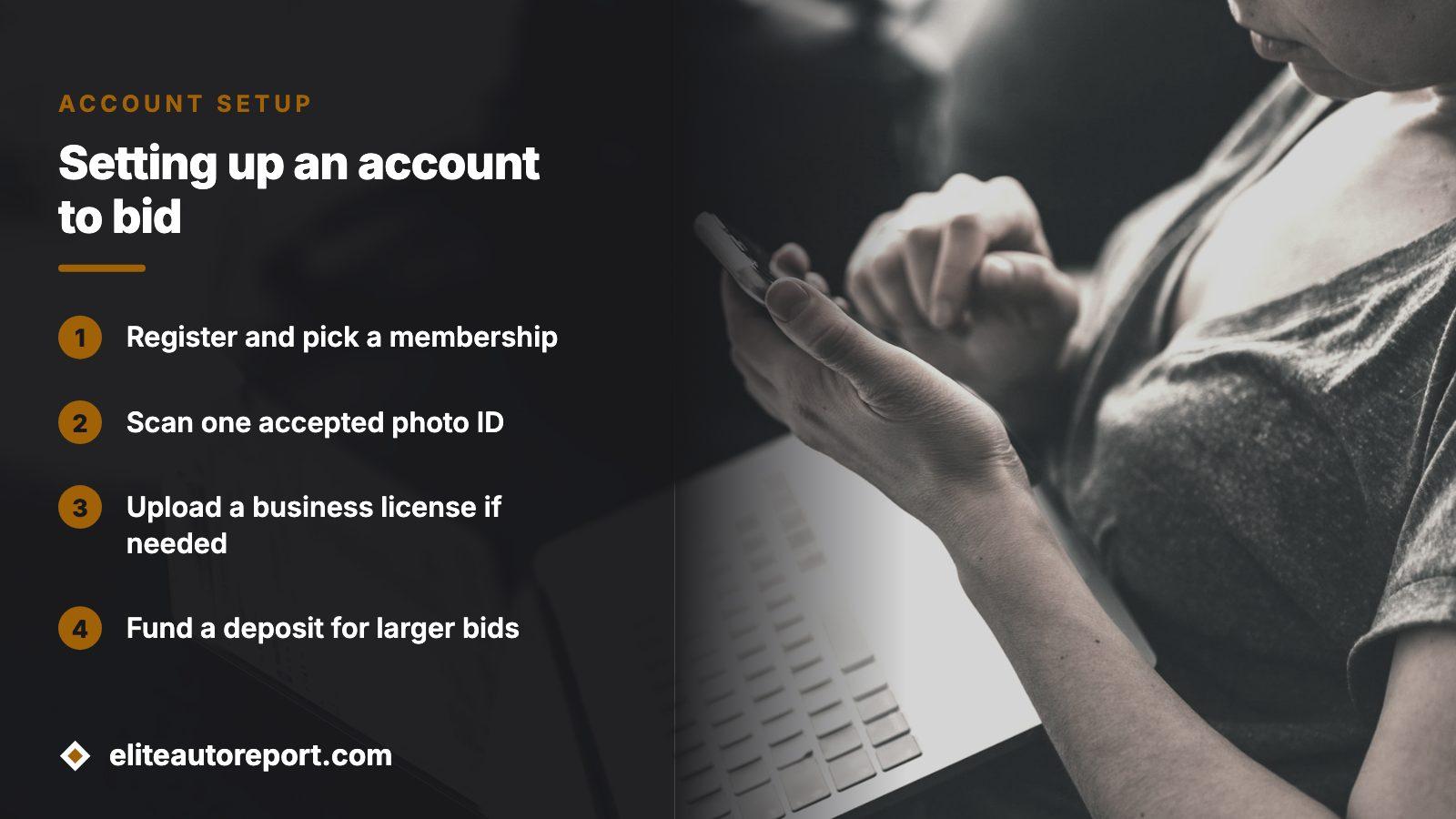
- Register and choose a membership level.
- Scan one accepted photo ID (license, passport or green card) with Copart's scanner.
- Upload a business license only if your state or lot demands one.
- Fund your deposit if you plan to bid above the Basic limit.
- Wait for confirmation that the documents cleared.
Deposits follow the level. Basic members need a deposit before bidding past $2,000, whereas Premier members put down one deposit that is refundable. A deposit can come back as long as no open bid or unpaid fee is attached.
Using a broker: what you gain and what you hand over
Copart describes brokers as licensed third parties who help buyers in restricted states. They bid, complete the purchase, and can handle documents, shipping and transfers. The U.S. list we opened held 24 brokers, each with a details link showing its fees.
The detail most buyers miss is in Copart's own wording: with a broker, you are buying the car from the broker and not Copart. Your contract, your fees and your title handover now depend on a smaller company. Ask for the full fee list in writing, and ask when the title reaches you and in whose name.
Read before you sign
Copart tells buyers to pick a few cars first and then choose a broker. Do the same: shortlist lots, run the VIN on each, and send the broker only the cars that survive the history check.
State rules decide how far an individual can go
Copart sends buyers to its State Licensing Overview page, with one entry per state and province. We did not open every entry, so confirm yours there and with your own state agency.
Texas shows how tight a rule can be. Its DMV allows a casual auction purchase only up to five branded cars sold to one person per calendar year. Buying or rebuilding a sixth, or dealing in such cars as a business, calls for a dealer license. The car also has to arrive with a salvage or nonrepairable title already issued, or an equivalent document from another state.
A branded vehicle there is also treated as salvage and can only return to the road after being rebuilt and inspected. A hobbyist chasing a damaged exotic should read that sequence before bidding.
Run the VIN before the bid, not after the invoice
Unlicensed buyers usually see fewer lots, so each mistake costs more. A VIN lookup shows whether the car has appeared at a salvage auction before, what its earlier photos looked like and which title brands are on file. A lot page shows the seller's description, but not what earlier owners and insurers recorded.
The federal title database behind NMVTIS reaches roughly 87 percent of the US fleet, which means an empty result can mislead. Even a thorough report cannot stand in for a mechanic looking at the car, as the FTC points out for used car shoppers.
- Earlier auction listings with dates and photos
- Title brand history, including salvage or rebuilt entries
- Odometer readings that fail to line up
- Theft and total-loss entries from insurers
Where an older sale exists, compare its damage photos with the lot's current photos. A flip that skipped repairs shows up quickly.
What the total really costs without a license
Membership and the broker's cut are only part of it. Copart's fee page adds a gate fee of $79 on every purchase, a bidding fee tied to the final bid, and an extra charge for bidding from a phone or computer. A late payment adds $50 per vehicle if you miss three business days, and a car left unpaid past the deadline is relisted, costing a tenth of its price (never under $600).
Copart notes that fees can come from the company, brokers, transporters and state or provincial regulators. Add them all before you decide a bid ceiling.
The first look at a VIN is free here. If you go on to the report, it is paid once, with no recurring charge, and the pricing page shows the current choices.
Red flags that should stop a bid
Most unlicensed buyers are shopping for a project, so some damage is expected. The question is whether the history agrees with the story on the lot page.
- A title brand the listing never mentions
- An earlier sale at a salvage auction on a car now described as clean
- Mileage that dropped between readings
- A broker who will not show fees or the date the title is delivered
- A lot your state would not let you register after purchase
A single hit means slow down and ask questions. Several at once means skip that lot.
Your next step if you are still interested
Pick two or three lots, copy each VIN, and run the preview. Then decide between a no-license lot and a broker based on what the history says, not on the lowest current bid.
If the car is a luxury or classic model, also read the sale record for earlier photos, since repaired exotics tend to resurface at later auctions. Keep the results with your bid notes in case a dispute starts later.
Where this information comes from
- Copart: Licensing help — ID requirement, no-license route, broker rules and deposits.
- Copart: Brokers — What brokers do and what services they list.
- Copart: Member fees — Gate, late and relist charges.
- Texas DMV: Salvage and nonrepairable manual — The casual-sale rule used as a state example.
- NMVTIS: Information for consumers — Coverage and limits of the federal title database.
- FTC: Used cars — Why a report cannot replace a hands-on inspection.
Sources and photos: Facts checked against the sources above in November 2026. Photos by Dimitri Karastelev, Michal Biernat and Iain on Unsplash; diagrams by EliteAutoReport.
Keep reading
- Copart VIN Check: Auction Photos and History for Luxury and Classic CarsThe earlier-sale record behind a Copart VIN.
- Copart Fees: What a Winning Bid Really Costs Before You Check the CarA closer read of the bill after a winning bid.
- Copart Damage Types: What a Lot's Damage Label Really Tells YouHow to read the damage labels on a lot.
- Salvage Auction Title Codes: How to Read Them on a Luxury or Classic LotWhat the title codes on an auction lot mean.
Frequently asked questions
Can I buy a car from Copart without a dealer license?
Often yes. Copart says a government ID on file is enough to bid, and unlicensed buyers can use no-license lots or a broker. Some lots stay restricted in some states, so confirm your state's rule on Copart's licensing page before you pay for membership.
What ID does Copart accept?
Copart asks for a government-issued photo ID, scanned through its own scanner; a license, passport or resident card all qualify. It needs the document before you can bid, and it says it should review uploads in about 1 business day.
Is buying through a Copart broker safe?
We cannot rate any broker. Copart lists them as licensed third parties and notes that you buy from the broker, not Copart. Ask for fees and title timing in writing, and pull the car's history yourself instead of trusting the broker's summary.
Do I need a deposit as a Basic member?
Per Copart, a Basic account must post a deposit before any bid above $2,000. Premier accounts make a single deposit that can be fully refunded. Money tied to a live bid or unpaid fees stays held until those clear.
Can I check a Copart car's history before bidding?
Yes. Type the VIN into our search box and read the free preview, then choose whether to buy the report. It can show earlier auction sales with photos, title brands and odometer readings, which a lot page may not mention.
Now check the car itself
The guide explains what to look for. The report shows what this VIN has on record.