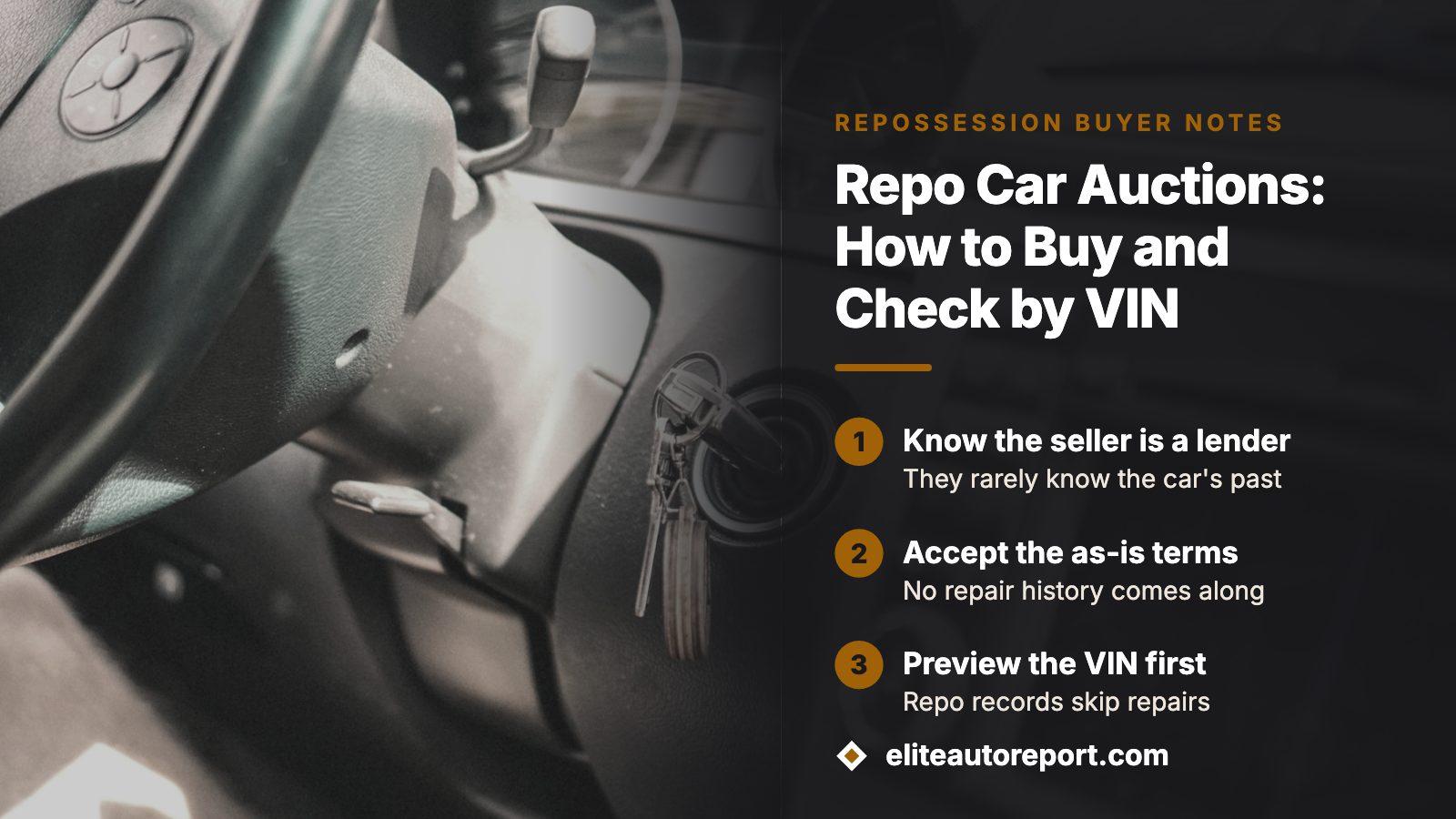
THE SHORT ANSWER
Repossessed cars are sold by the lender, often through a wholesale auction company, either privately or at a public sale. Most lots are as is, and the seller owes you no history. Before bidding, check the VIN for title brands, damage records, odometer readings and past auction photos, and have a mechanic inspect it if you can get to it.
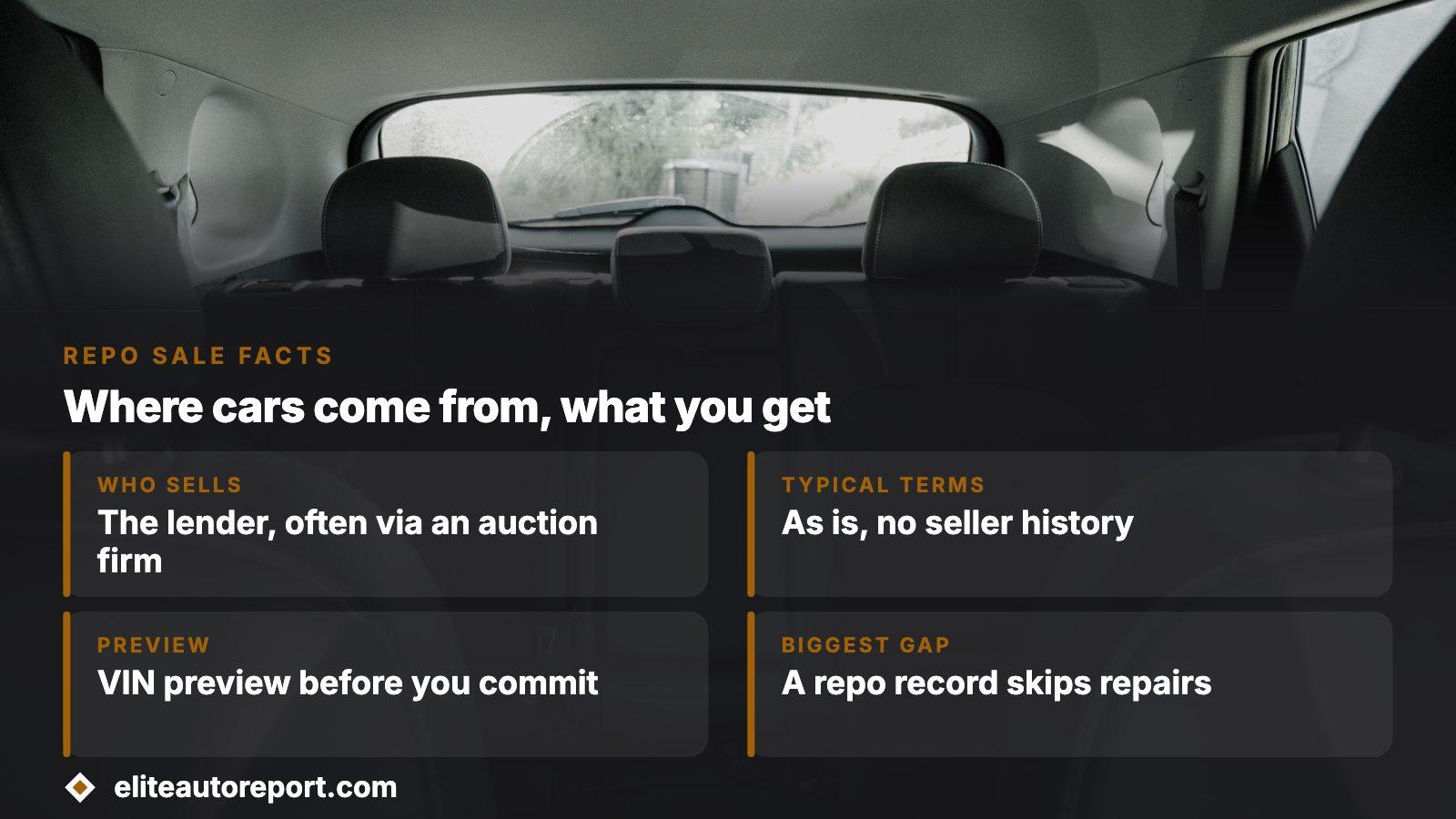
- Who sells
- The lender, often via an auction company
- Typical terms
- As is, no seller history
- Free step
- VIN preview before you commit
- Biggest gap
- A repo record says nothing about repairs
What a repo car auction really is
When a borrower stops paying, the contract often lets the lender take the car back, and the FTC notes that in many states this can happen without a court order or advance warning. Once the lender holds the car, it can keep it against the debt or sell it. Selling is the usual route, and that sale is what people call a repo auction.
The point of the sale is to recover money fast. Nobody in that chain has driven the car for months, and nobody has an incentive to dig into its past. For a reader shopping the exotic and luxury end, that matters more than usual, because a repossessed performance car may already have a history of auction runs, damage claims or title changes that the lot listing never mentions.
Where repossessed cars are sold
Most go through wholesale auction companies that serve dealers. Manheim, for one, says it runs over 100 locations worldwide and that only select ones hold public auctions of retail vehicles, so many lanes are closed to a walk-in buyer. Online platforms add another door. Copart states that a bidder without a business license can use a broker or bid on lots flagged as needing no license.
- Dealer-only lanes: the biggest pool, but you need a license or a dealer friend.
- Select public sales: open to anyone, with a smaller and often older mix of cars.
- Broker bidding: you buy from the broker, who may attach its own terms and fees.
- Direct lender or credit union sales: the lender's own notice or listing, where one exists.
The as-is problem
The FTC explains that an as-is sale means the seller will not pay for repairs after the deal, so every later problem is yours. Auction houses add their own traffic-light systems. Manheim describes green as no known defects with a seller guarantee, yellow as announced conditions that limit arbitration, red as as-is with arbitration in narrow cases, and blue as a lot offered before the seller holds the title.
A repo car often lands in the red or blue group. Blue deserves its own caution: the lender may still be sorting out the paperwork, and you could wait on a title while the car sits in your driveway. Ask the auction in writing how and when the title will reach you, and keep the answer.
What a VIN check adds that the lot sheet leaves out
A lot sheet gives a year, a model, a mileage figure and a few photos. The VIN opens the rest. EliteAutoReport leans on auction history: earlier sale listings, the damage noted at those sales and the photos taken then, set beside title brands and odometer readings.
| What the VIN can show | Why it changes your bid |
|---|---|
| Branded titles (salvage, junk, flood) | A branded car is worth less and can be hard to insure or resell |
| Earlier auction listings with photos | Lets you compare today's lot photos with older ones and spot hidden repairs |
| Odometer readings over time | A drop or a long gap can mean rollback or missing records |
| Theft and lien records | Protects you from a car with an open claim or a cloned VIN |
The Justice Department's NMVTIS page explains that a brand is a status a state stamps on a title, for instance junk, salvage or flood. It also describes flooded cars moved after Hurricane Katrina into states that do not brand flood vehicles, a reminder that a clean-looking title can still hide a past.
How to run the check before the bid closes
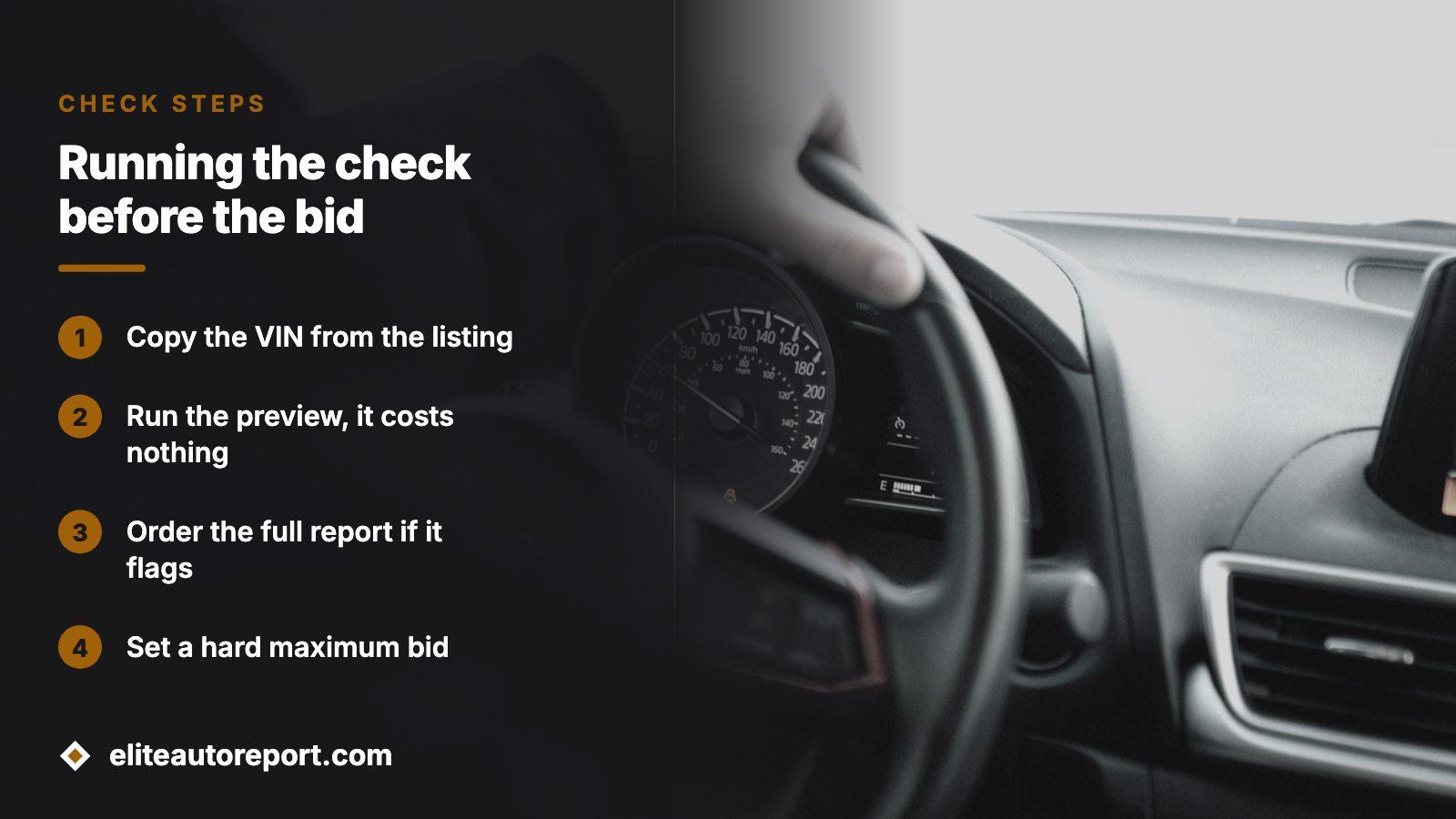
- Copy the 17-character VIN from the listing, then confirm it against the car's own dash plate and door jamb label if you can see them.
- Type it into the preview here; it costs nothing and tells you if records turned up.
- Order the full report when the preview finds something worth a closer look, starting with its auction and damage parts.
- Set a hard maximum bid that already subtracts repair work the report suggests.
- Skip the lot if the listing VIN and the car's own VIN do not match.
Doing this before you register for a sale is cheaper than doing it after you win. Many auctions charge fees on a winning bid, and walking away from a won lot can cost you.
Red flags in a repo car's record
- A salvage or flood brand that the listing never mentioned.
- Two or three auction appearances in a short stretch, a sign other buyers passed or flipped it.
- Photos from an earlier sale showing damage the current photos hide.
- An odometer figure lower than a past reading.
- A lien or title note that does not match who is selling.
A repo record is not a condition report
The FTC cautions that history reports tend to cover accidents and flooding, while mechanical faults rarely appear in them. Treat the report as the check on paperwork and damage, and a mechanic's written estimate as the check on the car itself.
What the rules cover, and what they leave to your state
Repossession rules are set largely by states. The FTC says some states send the former owner word of a public sale, giving that person a chance to show up and bid, and some let that person buy the car back by paying what is owed, which can include storage and sale preparation costs. As a buyer you rarely need those details, but they explain why a car can be pulled from a sale at the last minute.
The same FTC page tells readers to contact your state's attorney general or a nearby consumer protection agency for local rules. Make that call if a lender or auction refuses to explain how the car was sold. Never rely on a spoken promise about condition or title timing; the FTC notes that those are hard to enforce, so ask for the terms in writing.
Cost, and your next move
The preview carries no charge and tells you whether the VIN has a record trail. Going on to the full report takes one payment and no recurring plan; check the pricing page for current rates. Buying one report to protect a much larger bid is the sensible trade, and a pack suits a buyer weighing several lots.
After the report, schedule an independent inspection if the car is reachable. If it is not, bid less and keep your repair budget generous. A lender's repo lot is a fair place to find a good car, but only a checked VIN tells you which kind you are bidding on.
Where this information comes from
- FTC: Vehicle Repossession — how lenders take and sell cars, and what former owners may do
- FTC: Used car buying advice — as-is sales, history reports and independent inspections
- NMVTIS: Information for consumers — what title brands are and why flood and cloning cases matter
- Manheim: Arbitration — sale light meanings and the blue title-absent light
- Manheim: Public auction locations — which locations open sales to the public
- Copart: Licensing help — bidding through a broker without a business license
Sources and photos: Facts checked against the sources above in November 2026. Photos by tim, Miles Loewen and THLT LCX on Unsplash; diagrams by EliteAutoReport.
Keep reading
- Dealer-Only Car Auctions: Who Can Bid and How to Check a Lot's VINWhy most lanes need a license and what your options are.
- Government Car Auctions: Where to Find Them and What to Check by VINAnother public route to cars with no seller history.
- Auction History by VIN: Photos for Luxury, Exotic and Classic CarsHow earlier sale records and photos are read from a VIN.
- What Happens When You Buy a Car at Auction: Fees, Title and Hidden HistoryStep-by-step bidding advice for first-time auction buyers.
Frequently asked questions
Can anyone buy at a repo car auction?
Some sales are open to the public and many are not. Manheim says only select locations hold public auctions, and Copart says a buyer without a business license can use a broker or bid on lots flagged for no license. Check each auction's own rules before you register.
Are repo cars sold as is?
Often, yes. The FTC says an as-is sale leaves the repair risk with the buyer, and an auction's lights or announcements may narrow what you can dispute. Ask the auction how it treats a claim, and get any promise about the car written down before you bid.
Does a repo show on a vehicle history report?
Not as a dependable record. The NMVTIS consumer page lists title, odometer, brand and some theft data, and repossession is not among them. What the report can show is a salvage brand, damage and earlier auction photos, which matter more to a bidder.
What happens if the former owner tries to get the car back?
Some states let the borrower buy it back by settling the whole debt plus the lender's costs, or bid at a public sale. The FTC says rules differ by state. Ask the seller in writing whether any redemption right is still open before you pay.
Is a repo car cheaper than a normal used car?
This page cannot give price figures, because none were read on an official source. What the sale format changes is the risk: no seller history and no returns. That is why the VIN check and an inspection come before the bid, not after.
Now check the car itself
The guide explains what to look for. The report shows what this VIN has on record.