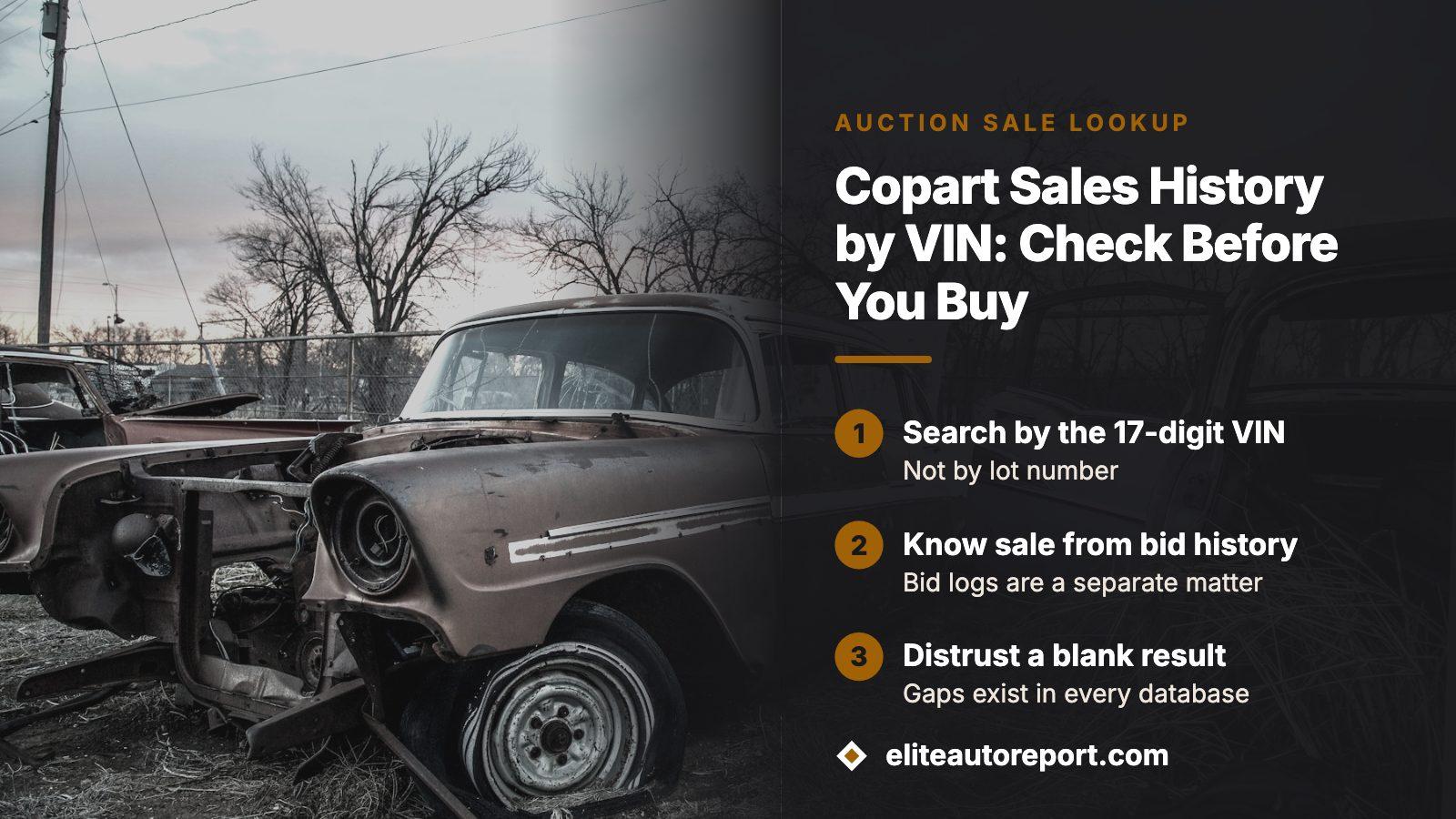
THE SHORT ANSWER
Enter the VIN into EliteAutoReport and the preview tells you whether an auction sale is on file. The paid report adds the sale record and any photos, next to title brands and odometer readings. Bid-by-bid logs are a separate matter and not something to count on. A blank result does not clear a car, since gaps exist in every database.
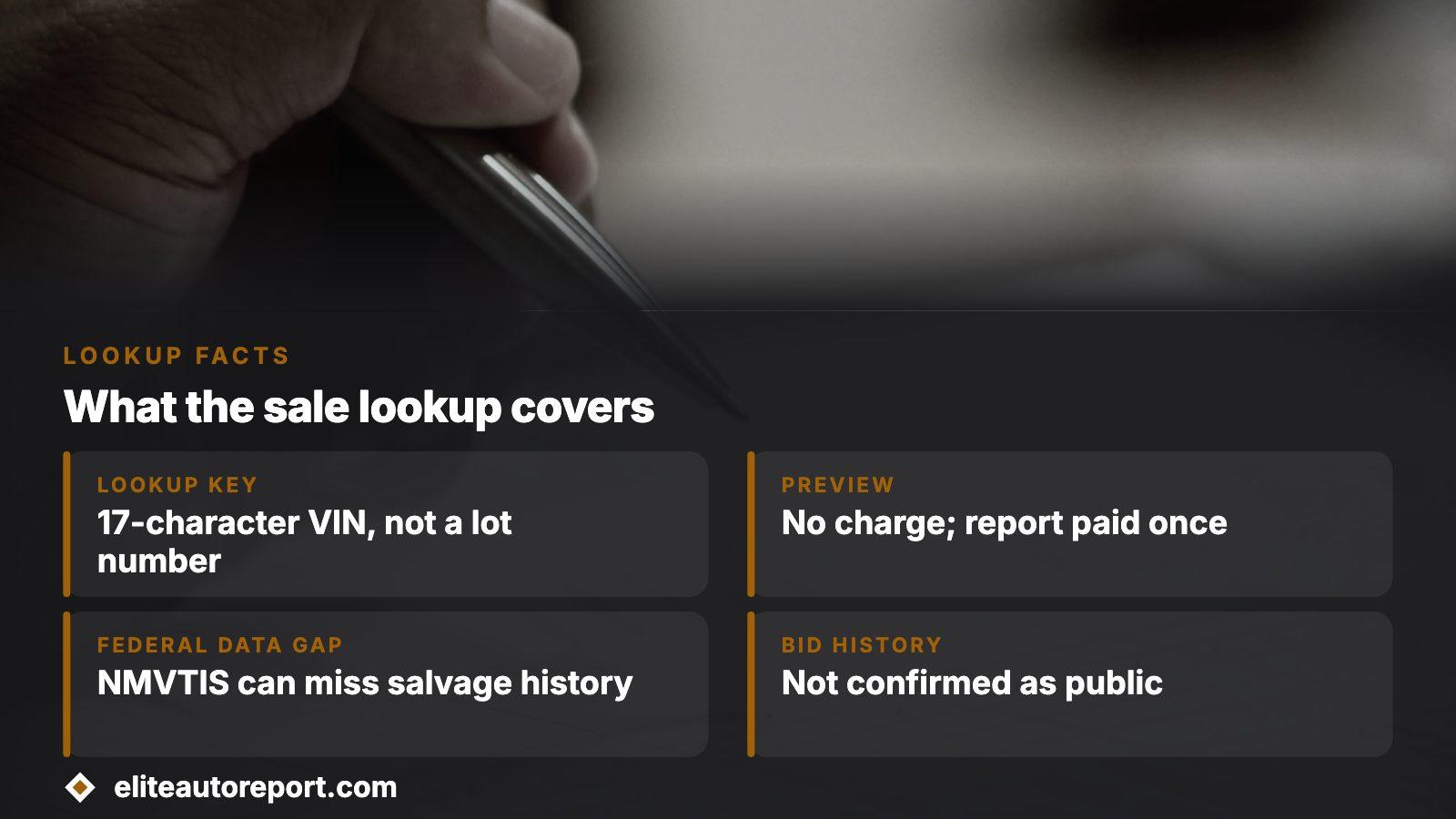
- Lookup key
- The 17-character VIN, not a lot number
- Preview
- Preview at no charge; report paid once
- Federal data gap
- NMVTIS can return a false negative on salvage history
- Bid history
- Not confirmed as public; ask the seller for the sale paperwork
Sales history and bid history are two different records
People type both phrases into a search box and expect one answer. They are not the same. A sales history says a vehicle passed through an auction and changed hands. A bid history would list the offers made along the way, who raised and when the climbing stopped.
For a buyer, the first one is the useful record. It tells you the car had an event serious enough to send it to a yard, which is the part a listing leaves out. The bids themselves say little about the car. I could not open Copart's own pages to confirm what it shows the public, so treat any claim of a bid-by-bid log tied to a VIN with caution.
Pieces of a past auction sale a report can bring back
A report tied to the VIN draws on title and salvage data instead of a single auction house catalog. Here is what bears on a sale.
- A salvage or auction entry, with photos where they exist.
- Any brand on the title, such as salvage, junk or flood.
- Odometer readings, so you can compare mileage before and after the sale.
- Theft records and insurance loss entries that explain why the car was sold.
- Liens and impound entries that sometimes send a car to auction.
On an exotic or a classic, a report like this is a starting point, and a mechanic who knows the marque should confirm what the photos suggest.
Where salvage auctions show up in government data
The Justice Department operates a national title database, NMVTIS. Its feed comes from several kinds of sources: state title offices, recyclers, yards that handle junk and salvage cars, and insurers. The program's FAQ lists salvage pools and salvage auctions among the businesses obliged to file.
Underwriters of auto insurance send inventory reports every month as well. When a total loss changes hands, then, a paper trail should exist, and a lookup can surface an insurer's salvage ruling or a move into a salvage yard.
Reasons a blank result may still hide a sale
The Justice Department page is frank about the limits. Its database includes about 87 percent of cars on US roads, with millions of salvage and total-loss entries, but fewer than all states report. A lookup can therefore come back falsely reassuring.
What a blank result means
No auction record found is not the same as never sold at auction. States set their own branding rules, so a car can spend time in a salvage yard without ever getting a salvage brand. Read the state's full title record, which each federal report links to, before you trust the silence.
Why this check matters most on luxury, exotic and classic cars
A repaired supercar or a restored classic can look flawless in a driveway. Panel gaps, paint depth and a clean interior prove very little once a good body shop has been at work, and the asking price often assumes a clean history.
Our focus is auction history and photos by VIN for this kind of vehicle. Pre-repair pictures are the closest thing to evidence of what was damaged and where. If an owner says the car never had a serious hit and a lot photo shows a crushed corner, you have a reason to slow down, ask for the repair invoices and bring in a specialist.
Running the lookup in five moves
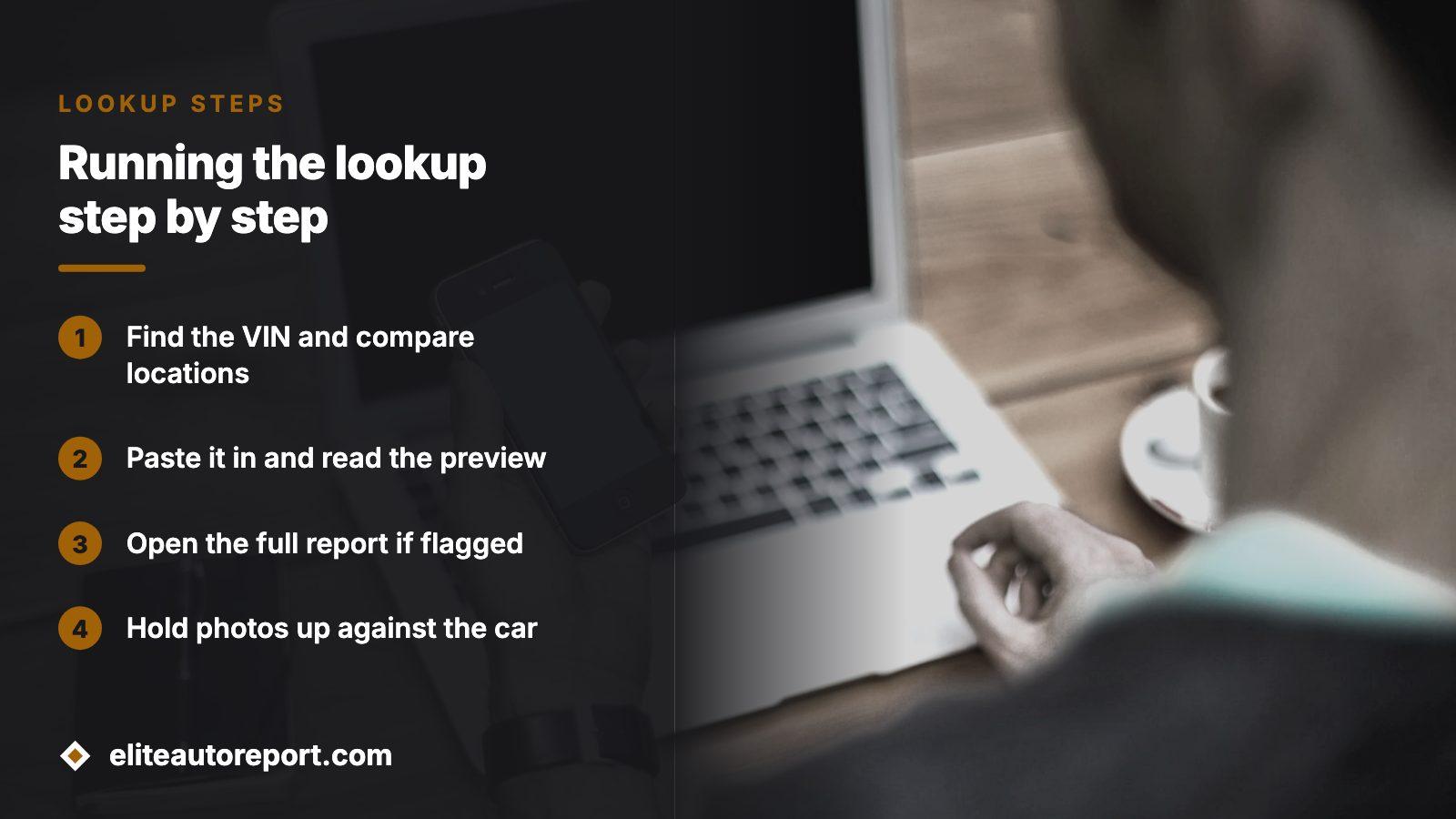
- Locate the VIN on the plate by the windshield, the driver-side door post and the title. Compare them; a mismatch is a finding in itself.
- Paste it into the search field and read the free preview that comes back.
- If the preview flags an auction entry or a brand, open the full report for the sale record, photos and odometer entries.
- Hold the photos up against the car you are viewing: color, trim level, wheel design.
- Bring what you found to the seller and ask for repair paperwork before paying.
A typo in a single character returns the wrong car or nothing, so paste the VIN rather than retyping it.
Reading the salvage labels you may find
Texas lists the brands it treats as salvage, and the list shows how varied the label is. It is worth knowing a few, because they point to very different histories.
| Label | What it points to |
|---|---|
| Fire Damage | The car burned. |
| Owner Retained | An insurer called it a total loss but the owner kept it. |
| Salvage - Stolen | A theft claim was paid; confirm with the state that it is no longer listed as stolen. |
| Salvage - Reasons Other Than Damage | For example, an abandoned car towed and never claimed. |
Under Texas rules, any car carrying one of these brands has to be rebuilt, then inspected, before it can return to the road.
Total loss sometimes means paperwork, not wreckage
The Justice Department notes an odd case: when a stolen car is gone for over 30 days, its insurer may book it as a total loss. Found later in perfect shape, it keeps the label, and an auction company may still sell it. A sale on record can therefore mean a crash, or a drawn-out theft claim.
That is why the photos and the odometer entries matter more than the label alone. Read them together and judge whether the story suits the car you are looking at.
Cost, and your next move
You can read the preview without paying. A full report afterward is one purchase and nothing renews. Bundles suit anyone weighing several cars; the rates are listed under pricing.
If a sale turns up, do not walk away on reflex. Get the repair records, have a specialist inspect the car and weigh the price against what you now know. If nothing turns up, inspect it anyway.
Where this information comes from
- NMVTIS: Information for consumers — coverage figures, data sources and the warning about missing records
- NMVTIS: Frequently asked questions — which businesses, auctions included, report salvage vehicles
- TxDMV: Salvage vehicles — the brand list and the rebuild-and-inspect rule
Sources and photos: Facts checked against the sources above in November 2026. Photos by Leo_Visions, Alejandro Escamilla and Masjid MABA on Unsplash; diagrams by EliteAutoReport.
Keep reading
- Copart VIN Check: Auction Photos and History for Luxury and Classic CarsWho sells at Copart and who may buy there.
- Car Auction Photos by VIN: Find Salvage Sale Pictures Before You BuyHow to read lot photos once you find them.
- Salvage Auction Title Codes: How to Read Them on a Luxury or Classic LotDecode the labels attached to auction cars.
- PricingCurrent report and bundle rates.
Frequently asked questions
Can I look up Copart sales history with just a VIN?
Yes, searching by VIN is the usual route, and it draws on title, salvage and auction data rather than one company catalog. Enter all 17 characters. The preview indicates whether an entry exists, and the paid report fills in detail where it is on file.
Is Copart bid history public?
I could not confirm that from any official page, since Copart's site would not open for me. Do not rely on a bid log. A sale record, the photos and the title brands tell you far more about the car's condition than the offers did.
Why does my VIN show no Copart sale?
Possibly the car never reached an auction, or the entry is absent from the data. Government data has holes, since some states do not submit anything, and a lookup can return a false negative. Pull the state title record and get the car inspected.
Does a salvage sale mean a crash happened?
Not always. A theft claim left open past 30 days can produce a total-loss label, and fire, flood and abandonment are other routes. Study the photos and the brand together to learn what actually happened.
Is a car from a salvage auction worth buying?
That turns on the damage, how well it was repaired and the price. Ask for invoices, get an insurance quote first and pay a specialist to inspect it. On an exotic or classic, repair quality drives value more than the label does.
Now check the car itself
The guide explains what to look for. The report shows what this VIN has on record.